
Structural Performance Analysis of HDPE and ABS Formwork Designs Using Finite Element Analysis
DOI:
https://doi.org/10.35718/ismatech.v4i1.8481971Keywords:
Formwork, Finite Element Method, HDPE, ABS, HoneycombAbstract
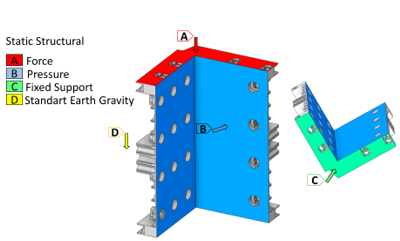
This study evaluates the structural performance of polymer-based formwork systems using HDPE and ABS materials through numerical simulation based on the Finite Element Method (FEM). Rib design variations, including square, round, and honeycomb, were analyzed by considering key parameters such as deformation, elastic strain, equivalent stress, and safety factor. The applied loading conditions consisted of hydrostatic pressure from fresh concrete and additional loads due to the accumulation of upper structural segments. The results show that ABS exhibits higher stiffness, leading to lower deformation and elastic strain values compared to HDPE. Nevertheless, HDPE demonstrates competitive performance, offering advantages in ductility, environmental resistance, and lower weight. Among the design configurations, the honeycomb structure provides the most efficient load distribution and minimizes stress concentration more effectively than square and round designs. All models, for both HDPE and ABS materials, satisfy structural safety requirements with safety factor values greater than one. Therefore, the combination of ABS material and honeycomb rib design is recommended as an optimal solution for polymer-based formwork applications, while HDPE remains a viable alternative for applications requiring enhanced flexibility and environmental durability.
References
[1] W. M. Souza, J. R. Correia, J. P. Firmo, J. Almeida, I. C. Rosa, and A. A. Correia, “Experimental study on seismic behavior of concrete columns reinforced with glass fiber-reinforced polymer bars,” ACI Struct. J., vol. 121, no. 4, 2024, doi: 10.14359/51740714.
[2] N. M. Hai et al., “Experimental and finite element analysis of permanent formwork impacts on flexural failures of reinforced concrete beams,” Eng. Fail. Anal., vol. 168, 2025, doi: 10.1016/j.engfailanal.2024.109069.
[3] N. A. Abdulla, “Influence of plastic pour-in form on mechanical behavior of concrete,” Structures, vol. 19, 2019, doi: 10.1016/j.istruc.2019.01.007.
[4] Y. Lv, K. Zhang, J. Li, Z. Feng, W. Jin, and Y. Liu, “Study on the mechanism of influence of PET, ABS, and steel formworks on the mirror-faced characteristics and physical properties of high-performance mortar surfaces,” Constr. Build. Mater., vol. 499, 2025, doi: 10.1016/j.conbuildmat.2025.144127.
[5] T. Brian, J. Sjah, and N. Handika, “Experimental and numerical study of recycled HDPE formwork beams,” IOP Conf. Ser.: Earth Environ. Sci., vol. 1488, no. 1, 2025, doi: 10.1088/1755-1315/1488/1/012092.
[6] T. K. Kim, J. S. Park, S. H. Kim, and W. T. Jung, “Structural behavior evaluation of reinforced concrete using the fiber-reinforced polymer strengthening method,” Polymers (Basel), vol. 13, no. 5, 2021, doi: 10.3390/polym13050780.
[7] J. Nilimaa, Y. Gamil, and V. Zhaka, “Formwork engineering for sustainable concrete construction,” CivilEng, vol. 4, no. 4, pp. 1098–1120, 2023, doi: 10.3390/civileng4040060.
[8] T. Ferreira et al., “Manufacture and characterization of polypropylene (PP) and high-density polyethylene (HDPE) blocks for potential use as masonry component in civil construction,” Polymers (Basel), vol. 14, no. 12, 2022, doi: 10.3390/polym14122463.
[9] A. Jipa et al., “Environmental stress cracking of 3D-printed polymers exposed to concrete,” Addit. Manuf., vol. 58, 2022, doi: 10.1016/j.addma.2022.103026.
[10] T. Singleton et al., “Finite element analysis of manufacturing deformation in polymer matrix composites,” Materials (Basel), vol. 17, no. 10, 2024, doi: 10.3390/ma17102228.
[11] Q. Wang, C. Qian, and Z. Wu, “Research on the rational design method of strength reinforcement for thin-walled structure based on limit load analysis,” Appl. Sci., vol. 12, no. 4, 2022, doi: 10.3390/app12042208.
[12] Y. Chen et al., “Experimental and numerical study of a circular rib-stiffened flange connection under combined loading,” Sci. Rep., vol. 12, no. 1, 2022, doi: 10.1038/s41598-022-12896-w.
[13] H. M. Hameed and H. M. Hasan, “Exploring honeycomb structures: A review of their types and applications,” 2025, doi: 10.1016/j.istruc.2025.108837.
[14] J. Xie, J. Huang, and X. Deng, “In-plane mechanical behavior design of hexagonal honeycomb,” Biomimetics, vol. 11, no. 3, 2026, doi: 10.3390/biomimetics11030172.
[15] F. M. Andersen et al., “Characterization of recycled HDPE under cyclic loading,” Symp. Mech. Manuf. Eng., 2021.
[16] M. A. Dundar et al., “Mechanical characteristics of ABS at low strain rates,” Polym. Polym. Compos., vol. 29, no. 5, 2021, doi: 10.1177/0967391120916619.
[17] N. Ghafoori and H. Diawara, “Influence of temperature on concrete performance,” Constr. Build. Mater., vol. 24, no. 6, 2010, doi: 10.1016/j.conbuildmat.2009.11.023.
[18] M. U. Pawara et al., “Finite element analysis of LCT bottom structure conversion,” J. Marit. Technol. Soc., vol. 2, no. 1, pp. 8–15, 2023, doi: 10.62012/mp.v2i1.25130.
[19] A. I. Wulandari et al., “Collision analysis of SPOB using FEM,” Kapal, vol. 19, no. 2, pp. 101–111, 2022, doi: 10.14710/kapal.v19i2.45417.
[20] A. I. Wulandari et al., “Strength analysis of transverse bulkhead using FEM,” IJMEIR, vol. 8, no. 2, pp. 109–116, 2025, doi: 10.12962/j25481479.v8i2.
Downloads
Published
How to Cite
Issue
Section
License
Copyright (c) 2026 zulkarnaen zulkarnaen, Harus Laksana Guntur, Riyki Apriandi

This work is licensed under a Creative Commons Attribution-ShareAlike 4.0 International License.