| ::: About ISMATECH Journal ::: |
|
::: Author Information ::: |
scopus citedness

The Indonesian Journal of Maritime Technology (ISMATECH) was established in 2023 in response to the growing need for a dedicated scholarly platform that accommodates academic publications in the fields of maritime science and marine technology. The journal was initiated by academics and professionals who recognized the strategic importance of advancing scientific research in areas such as Naval Architecture, Ocean Engineering, Marine Engineering, and Mechanical Engineering with maritime applications, along with other related disciplines including marine and fisheries science, renewable and ocean energy, electrical engineering, materials and metallurgical engineering, environmental engineering, and other interdisciplinary fields that support the development of maritime science and technology.
ISMATECH was founded with the mission of supporting the dissemination of innovative research and technological developments that contribute to the sustainability, safety, and efficiency of maritime industries, both in Indonesia and globally. Since its inception, the journal has been committed to upholding high standards of publication ethics, a rigorous peer-review process, and open-access principles, ensuring broad accessibility and meaningful academic impact for researchers, practitioners, and policymakers.
The journal officially began publication in June 2023 and follows a biannual publication schedule, releasing issues in June and December each year. Since its first volume, ISMATECH has received submissions from researchers, engineers, and practitioners from various academic institutions and industries, and continues to expand its contribution to the maritime research community.
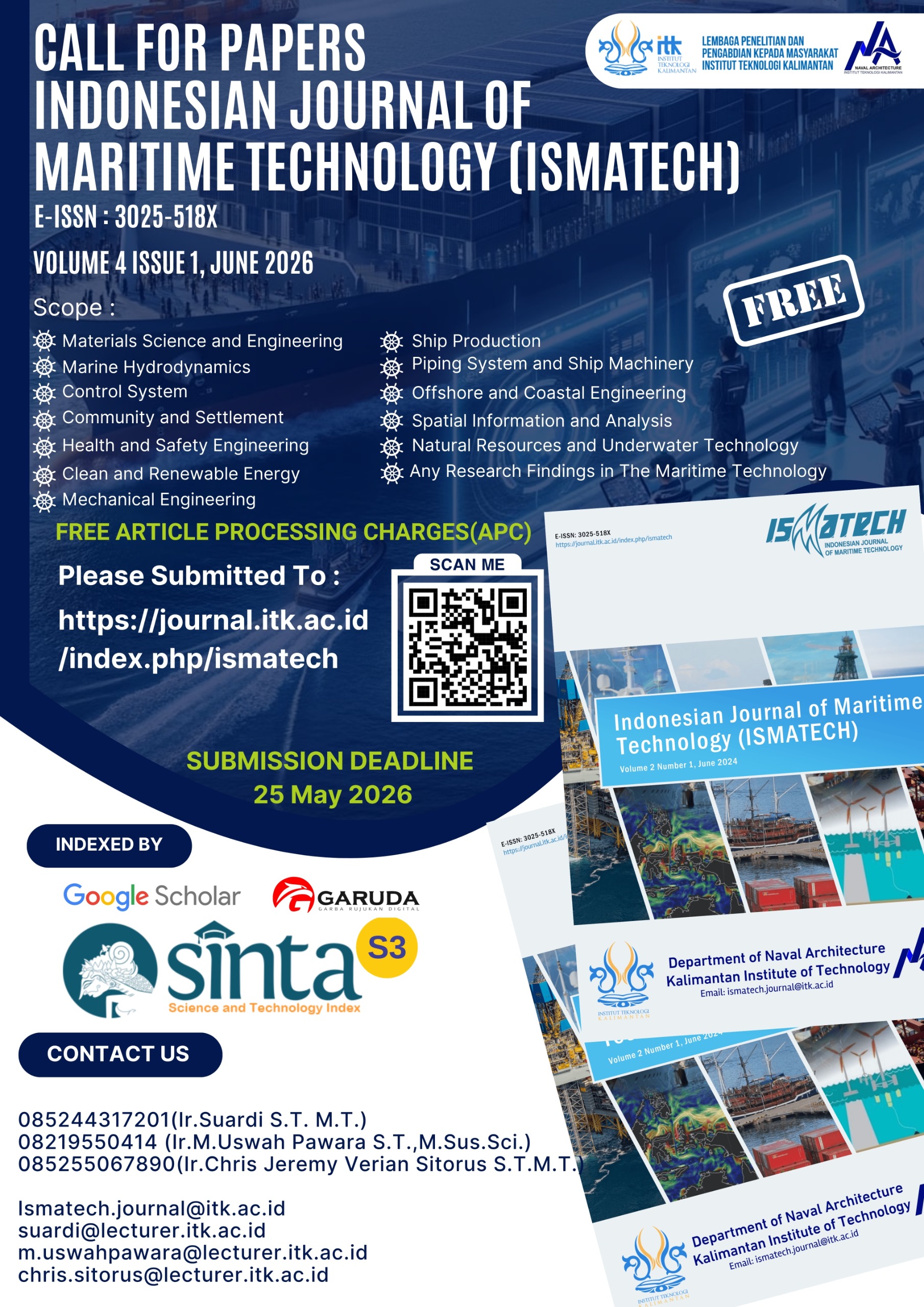
As of April 8, 2026, ISMATECH has officially been awarded SINTA 3 accreditation, in accordance with the Decree of the Director General of Research and Development Number 156/C/C3/KPT/2026 dated April 7, 2026, concerning the Accreditation Ranking of Scientific Journals Period 2 of 2025. This achievement reflects the journal’s commitment to maintaining high academic standards and enhancing the quality and impact of its publications at the national level.
As the journal continues to develop, ISMATECH remains dedicated to fostering interdisciplinary collaboration and supporting research that addresses global maritime challenges, including those aligned with the United Nations Sustainable Development Goals (SDGs). Through this commitment, the journal aims to serve as an important platform for advancing maritime technology research and innovation at both the national and international levels.

The Indonesian Journal of Maritime Technology (ISMATECH) is a peer-reviewed scientific journal dedicated to publishing high-quality research articles, review papers, and applied studies in the field of maritime science and technology. The journal aims to promote scientific advancement and technological innovation that support the development, sustainability, safety, and efficiency of maritime industries at national and global levels.
ISMATECH publishes interdisciplinary research covering a wide range of topics related to maritime engineering, marine science, and maritime technology development. The journal welcomes contributions from researchers, academics, engineers, and practitioners working in various fields related to the maritime sector.
The scope of the journal includes, but is not limited to, the following areas:
1. Naval Architecture and Ship Design
2. Marine and Ocean Engineering
3. Marine Engineering and Ship Machinery
4. Renewable and Alternative Energy in Maritime Systems
5. Computational and Numerical Methods
6. Electrical, Control, and Automation Systems in Maritime Technology
7. Marine Environmental and Sustainability Studies
8. Marine Resources and Fisheries Technology
Through this multidisciplinary scope, ISMATECH aims to serve as an academic platform for the dissemination of innovative research and technological developments that contribute to the advancement of maritime science and technology.
ISMATECH journal publication can follow the flow below

| ::: About ISMATECH Journal ::: |
|
::: Author Information ::: |
scopus citedness