Design and Development of an IoT-Based High-Temperature Monitoring System for Early Fire Detection in Ship Engines Using Thermocouple
DOI:
https://doi.org/10.35718/ismatech.v4i2.8482359Keywords:
Internet of Things, Ship Engine, Temperature Monitoring, K-Type Thermocouple, Early Warning SystemAbstract
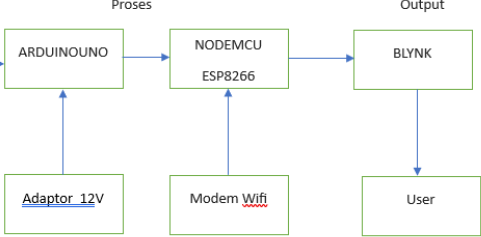
The operational safety of ship engines is a vital aspect of the maritime industry. A major risk threatening vessel safety is fire caused by engine overheating. To mitigate this risk, a real-time temperature monitoring system capable of providing early warnings when temperatures reach dangerous thresholds is required. This research aims to design an Internet of Things (IoT)-based temperature monitoring system that tracks ship engine temperatures in real-time and transmits data to users via the Blynk IoT application. The system utilizes a K-type thermocouple temperature sensor connected to a MAX6675 module for accurate temperature readings. The sensor is interfaced with an Arduino Uno microcontroller, which transmits temperature data via serial communication to a NodeMCU ESP8266. The NodeMCU acts as the transmitter, sending data to the Blynk Cloud platform over a Wi-Fi connection. Additionally, the system features an I2C LCD to display real-time temperature readings and a buzzer to provide an audible alert if the temperature exceeds the set threshold. Test results demonstrate that the system effectively monitors ship engine temperatures in real-time, triggers a buzzer alert during overheating events, and consistently transmits temperature data to the Blynk application. Consequently, this system enhances vessel operational safety by effectively providing temperature information and early warnings to the crew.
References
[1] Y. Wardi, D. Bak, and F. Al Aziz, “Sistem Monitoring Kondisi Mesin Kapal Berbasis Internet of Things (IoT) dan Predictive Maintenance Menggunakan Mikrokontroler dan Machine Learning di Edge,” ESDJ Electron. Sea Def. J., vol. 1, pp. 67–74, 2025, [Online]. Available: https://journal.akademitnial.ac.id/index.php/ESDJ/article/view/161/130
[2] Suardi S, Pratama BY, Pawara MU, Yosefan A, Anugerah AN, Abdurrahman L, Tasrief M, Klara S. Optimizing generator power usage through LED lighting distribution on tugboats: A case study of a 26.80-meter vessel. Indonesian Journal of Maritime Technology. 2025 Apr 25;3(1).
[3] D. A. N. Analisis and K. Sistem, “Perancangan Model Sistem Monitoring Mesin Kapal Berbasis Internet Of Things ( Iot ): Arsitektur 4-Tier Dengan Deteksi Anomali Berbasis Machine Learning,” vol. 6, no. 03, pp. 203–213, 2024.
[4] N. N. Saphira, M. R. Pangestu, and M. K. Naf’an, “Pengembangan Sistem Smart Ship Safety Melalui Kolaborasi IoT Dan Condition-Based Maintenance Mesin Kapal,” Bluepr. J., vol. 1, no. 3, pp. 104–109, 2025.
[5] M. R. Mauk, S. I. Pella, and H. F. J. Lami, “Sistem Internet of Things (Iot) Deteksi Kebakaran Lahan Pada Daerah Tanpa Infrastruktur Internet,” J. Ilm. Flash, vol. 10, no. 1, pp. 31–35, 2024, [Online]. Available: https://www.researchgate.net/publication/387516660
[6] A. Riyadi, E. Nursanti, and J. H. Galuh, “Perancangan Sistem Monitoring Deteksi Kebakaran Berbasis Internet of Things (IoT) Untuk Menurunkan Risiko Kebakaran,” J. Valtech, vol. 7, no. 1, pp. 123–128, 2024, doi: 10.36040/valtech.v7i1.9272.
[7] M. V. Gultom and I. S. Putro, “Sistem Deteksi Kebakaran Berbasis Iot Dengan Mikrokontroler Esp32,” J. Inform. dan Tek. Elektro Terap., vol. 13, no. 2, 2025, doi: 10.23960/jitet.v13i2.6236.
[8] D. H. Pranata and L. Latipah, “Prototype Pendeteksi Kebakaran Dini Berbasis Internet of Things (IoT) dengan Notifikasi Telegram,” J. Ilmu Komput. dan Bisnis, vol. 15, no. 1, pp. 116–124, 2024, doi: 10.47927/jikb.v15i1.709.
[9] F. Salam and O. Alexander, “Perancangan Monitoring Suhu Berbasis Internet of Things Dengan Node Mcu Esp8266, Dht 11 Dan Thingspeak,” J. Ilm. Inform., vol. 11, no. 01, pp. 22–26, 2023, doi: 10.33884/jif.v11i01.6546.
[10] Suardi AI, Pawara TM, Alamsyah TH. Patrol ship design to guard the natuna seas. Int. J. Mar. Eng. Innov. Res. 2022 Sep 22;7(3):171-9. doi: https://doi.org/10.12962/j25481479.v7i3
[11] P. O. Putra, H. Setiawan, and Z. R. Mair, “Implementasi Alat Monitoring Suhu Ruangan Berbasis Internet Of Things (IoT) Menggunakan Metode MQTT dan HTML Pada Ruangan Server Universitas Indo Global Mandiri Palembang,” J. Softw. Eng. Comput. Intell., vol. 1, no. 1, pp. 40–50, 2023, doi: 10.36982/jseci.v1i1.3046.
[12] Setiawan W, Kyaw AY. Plan for the power requirements of the lights in the fishing boat room using LED lights. Indonesian Journal of Maritime Technology. 2023 Jun 27;1(1). doi: https://doi.org/10.35718/ismatech.v1i1.877
[13] Y. A. Yunus, R. Satra, and F. Fattah, “Sistem Monitoring Suhu Pada Inkubator Penetas Telur Berbasis IoT,” LINIER Lit. Inform. dan Komput., vol. 1, no. 4, pp. 389–394, 2024, doi: 10.33096/linier.v1i4.2538.
[14] J. R. Material and M. Energi, “FT-UMSU FT-UMSU,” vol. 7, no. 2, pp. 335–342, 2024.
[15] H. Firmansyah and W. Indrasari, “Internet of Things-Based Real-Time Thermal Monitoring: Utilizing the Affordable MLX90640 Thermal Camera and the Industrial MAX6675 Thermocouple Module with a Linear Regression Characterization Method,” Positron, vol. 15, no. 1, pp. 94–103, 2025, doi: 10.26418/positron.v15i1.89878.
[16] Aditya Putra Mahendra, Sri Mulyanto Herlambang, and Prima Yudha Yudianto, “Rancang Bangun Sistem Monitoring Kinerja Main Engine Kapal Berbasis IOT,” Globe Publ. Ilmu Tek. Teknol. Kebumian, Ilmu Perkapalan, vol. 2, no. 4, pp. 139–159, 2024, doi: 10.61132/globe.v2i4.575.
[17] C. Prastyadi, B. G. Irianto, H. G. Ariswati, D. Titisari, S. Nyatte, and S. Misra, “Analysis of the Accuracy of Thermocouple Sensors at the Incubator Calibrator Laboratory Equipped with Internet of Thing-Based Data Storage,” Indones. J. Electron. Electromed. Eng. Med. Informatics, vol. 4, no. 4, pp. 160–167, 2025, doi: 10.35882/ijeeemi.v4i4.158.
[18] D. P. Prakosa and S. Wijayanta, “Internet of Things (IoT)-Based Brake Fluid Condition Detection and Vapor Lock Prevention Device,” J. Nas. Pendidik. Tek. Inform., vol. 15, no. 1, pp. 24–34, 2026, doi: 10.23887/janapati.v15i1.105070.
[19] Clara S. Perencanaan distribusi penerangan untuk ruangan di atas kapal tb liberty 217 gt menggunakan metode zonal cavity. INOVTEK POLBENG. 2023 Jun 13.
[20] Suardi S, Maulana MK, Ikhwani RJ, Pawara MU, Mahmuddin F, Tasrief M. Design and Implementation of Solar Cells as an Alternative Power Source for Pinisi Ships. Computational And Experimental Research In Materials And Renewable Energy. 2024 Nov 25;7(2):93-104.
Downloads
Published
Issue
Section
License
Copyright (c) 2026 Suardi Suardi, Syahrul Gunawan Sitanggang, Faisal Mahmuddin, Abdul Basiq Zainal Abidin, Aung Ye Kyaw, A Ahmad Fauzan Ihsan, Novita Vadina Marta Ria

This work is licensed under a Creative Commons Attribution-ShareAlike 4.0 International License.